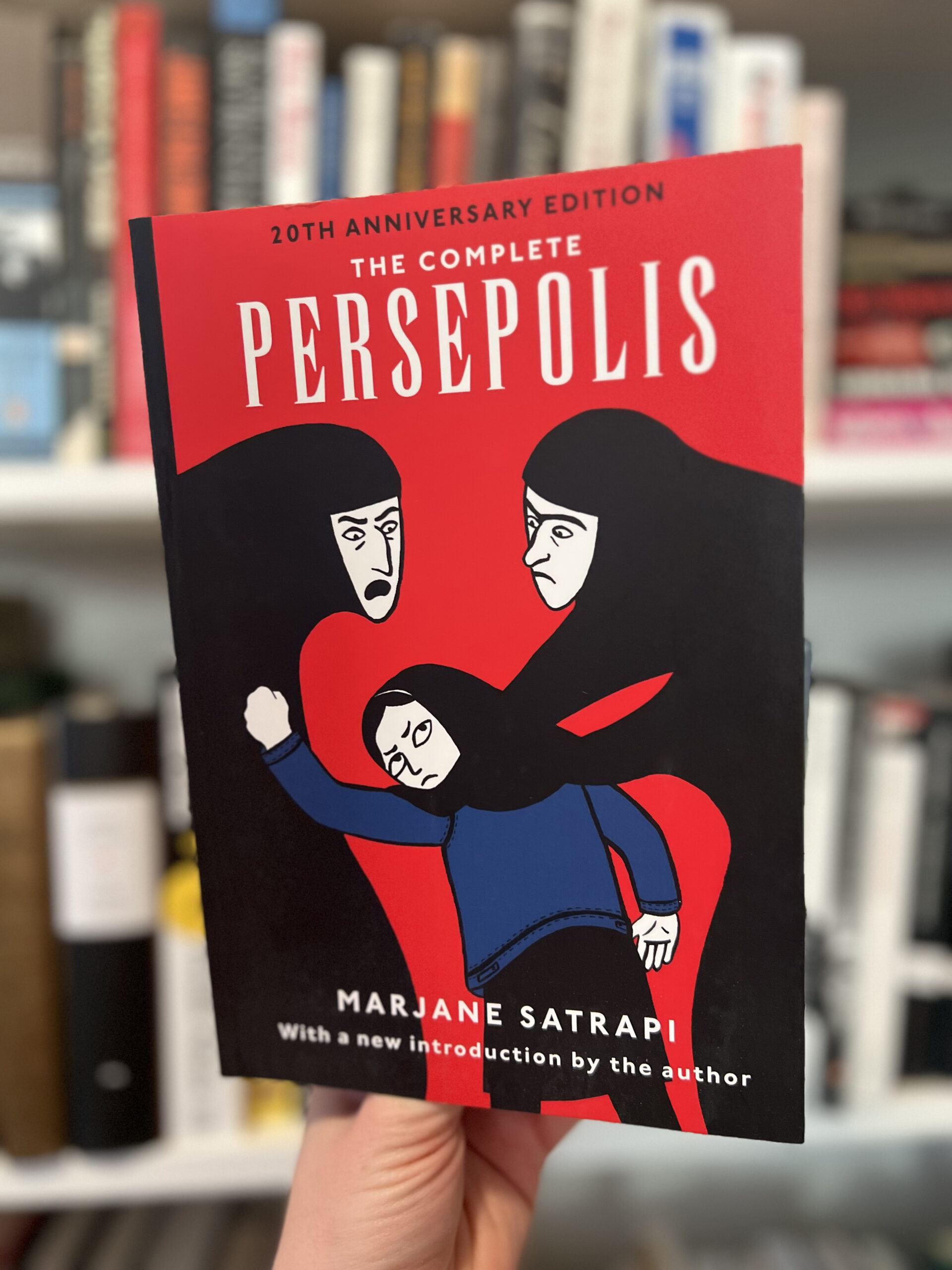
By Marjane Satrapi
“I AM iRANiAN AND PROUD OF IT!”
Summary
This coming-of-age graphic novel follows Marjane Satrapi and her family in Tehran during the 1979 Islamic Revolution. Raised in an activist household, Marjane develops strong convictions, and her outspokenness lands her in trouble both in Iran and later abroad as a refugee. Throughout it all, she clings to education and art as sources of stability and hope. The book offers an honest depiction of corruption and violence in post-revolutionary Iran, where instability has persisted, while also delivering an anxiety-inducing yet deeply endearing family portrait. Ultimately, this book is a story of “home,” and it stands as a powerful testament to women’s empowerment.
Quick Info
- Year of Publication: 2023
- Number of Pages: 341
- Awards/Nominations: Angoulême International Comics Festival (Coup de Coeur), Alex Award, Booklist Editor’s Choice for YA, New York Public Library Books for the Teen Age selection, YALSA Best Books for Young Adults
Why I Chose to Read The Complete Persepolis: 20th Anniversary Edition
As a veteran of the Global War on Terrorism, I have a strong curiosity about Middle Eastern history. Like many other military veterans around the globe, I have spent much time in the aftermath of war questioning my service. I wanted to read a book that humanized Iranians and painted a clearer picture of their history, so I could share that wealth with others inside and outside the classroom.
Teaching Considerations
Audience: Booksellers list this as “ages 13+.” The depictions of violence are intense, but I think age 13 makes sense, especially considering that the protagonist experienced all of this at a much, much younger age, and as a consequence, wound up moving to Austria on her own at age 14.
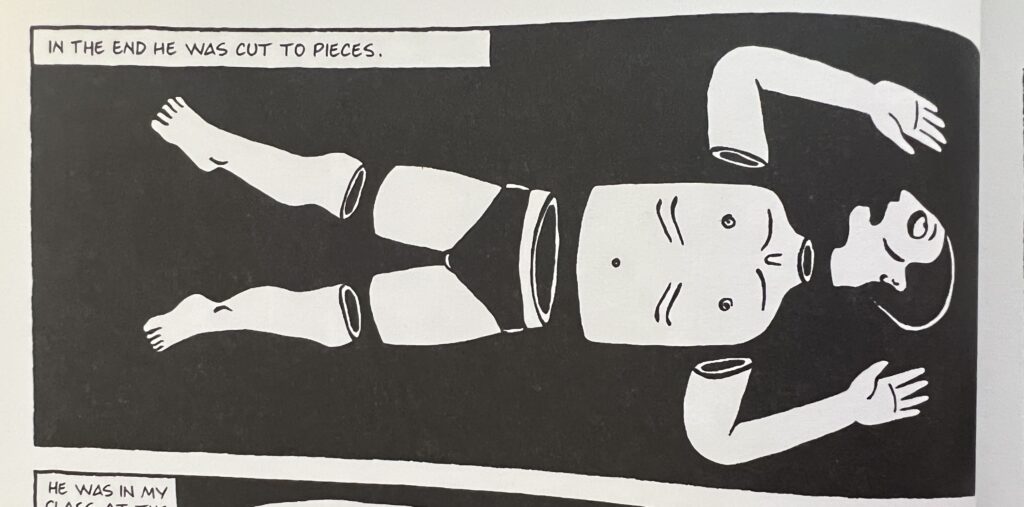
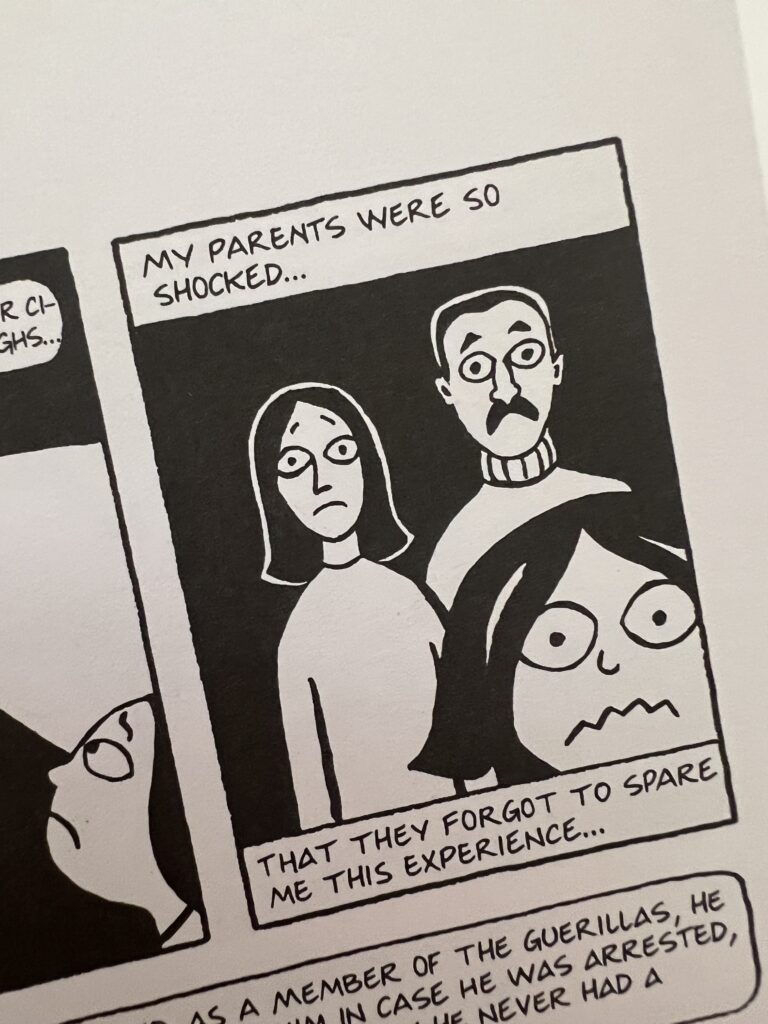
Key Themes: revolution, political oppression, advocacy, identity, displacement, women’s rights, family, memory, and storytelling.
Instructional Ideas:
CHARACTER
This is Marjane’s story, and she owns all the honorable, shameful, gory, confusing, and empowering details. In the process, she also fleshes out her wonderful, sharp, funny, loving parents and grandmother.
STRUCTURE
This story plays out chronologically, but in an intriguing short story format. Each section has a fitting, memorable title. For example: “The Veil,” “The Vegetable,” The Shabbat,” and “The Cigarette.”
ILLUSTRATIONS
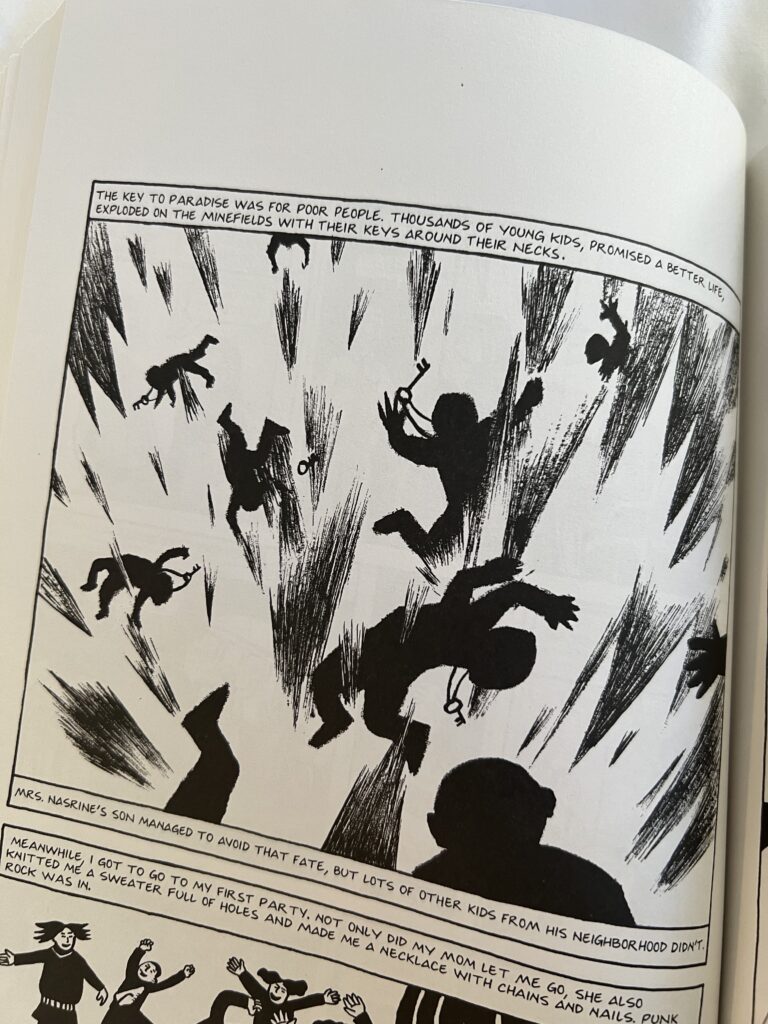
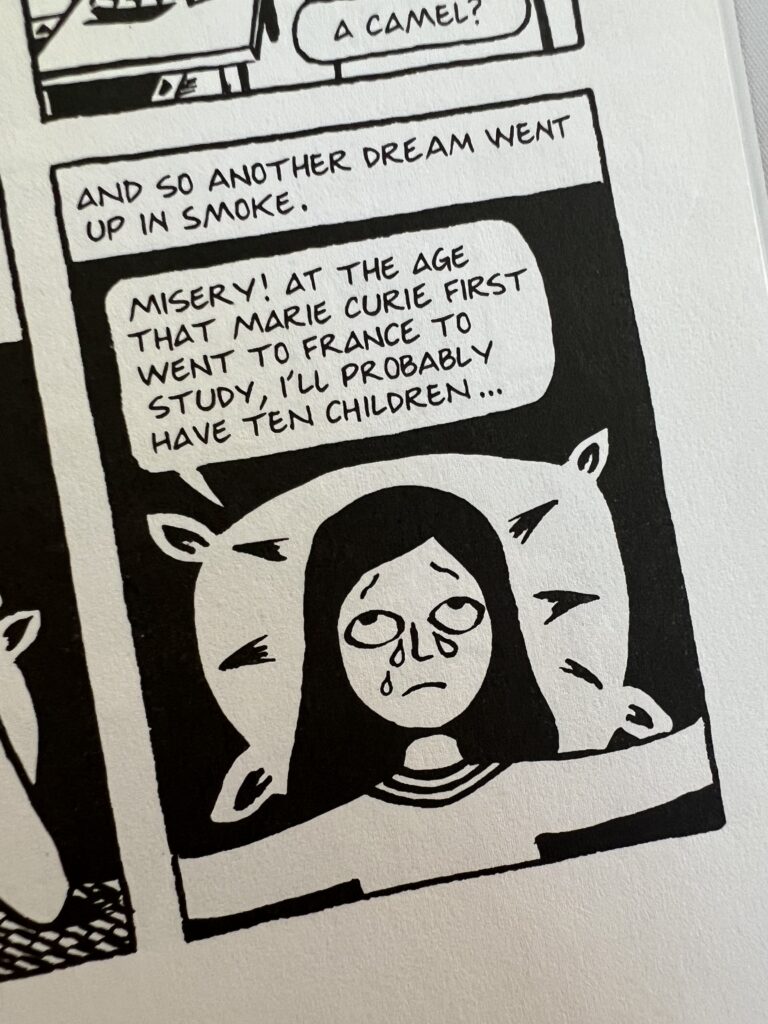
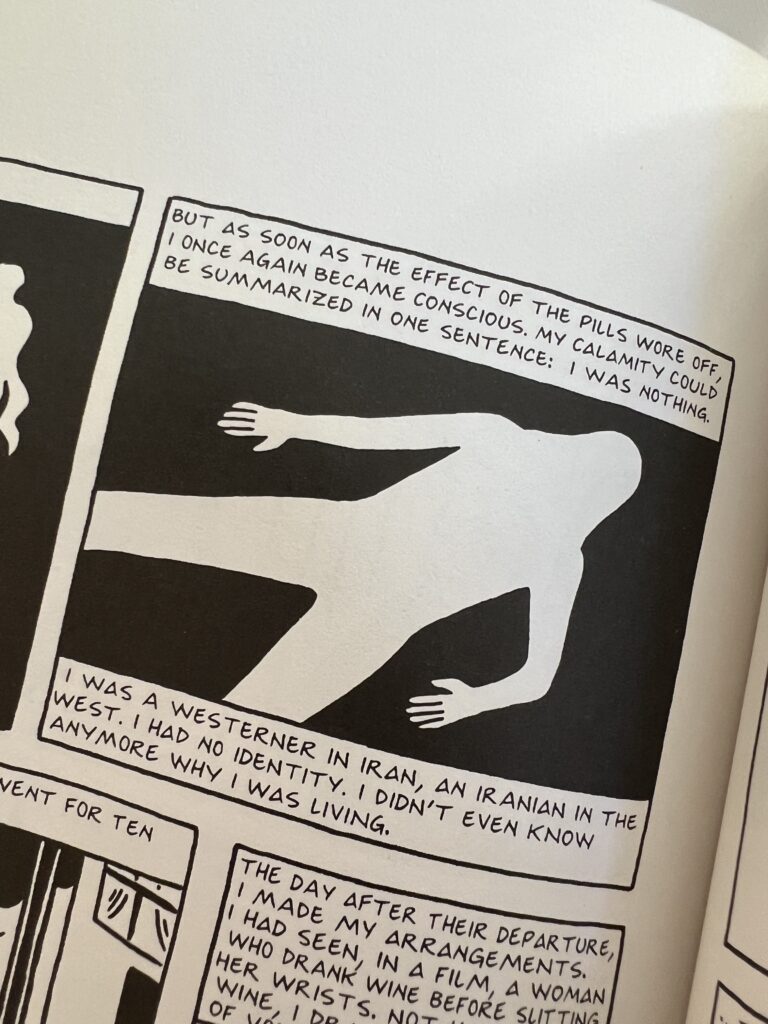
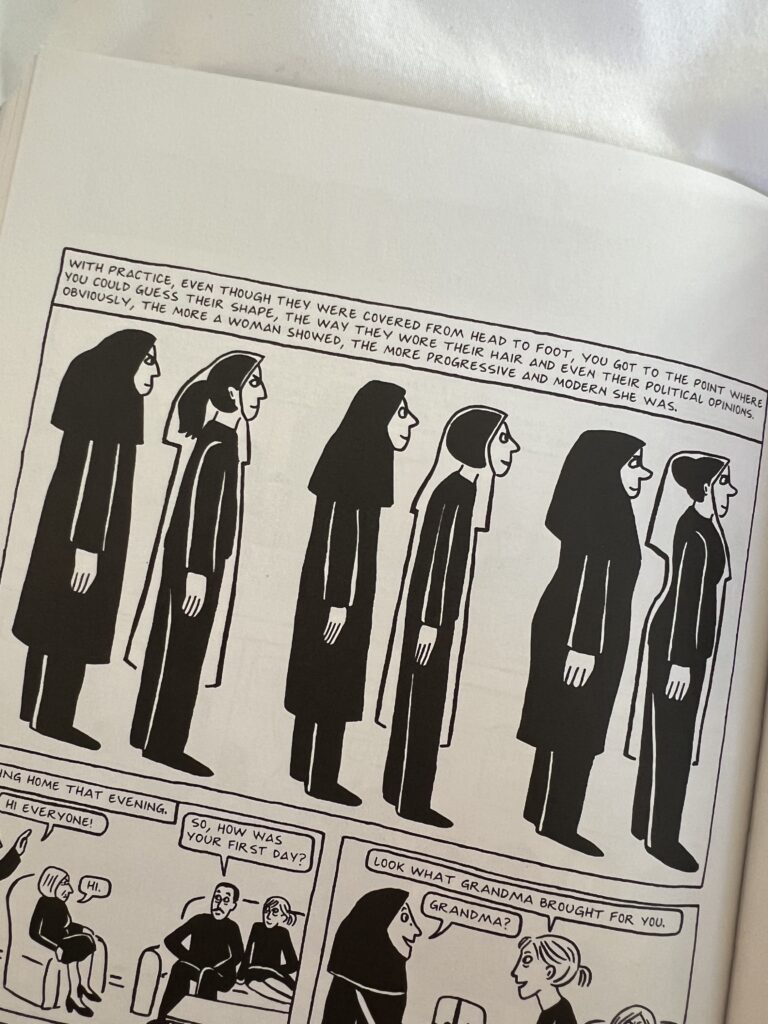
Marjane Satrapi did the illustrations herself. They’re powerful in black and white, and they bring the emotional heart of the text to life.
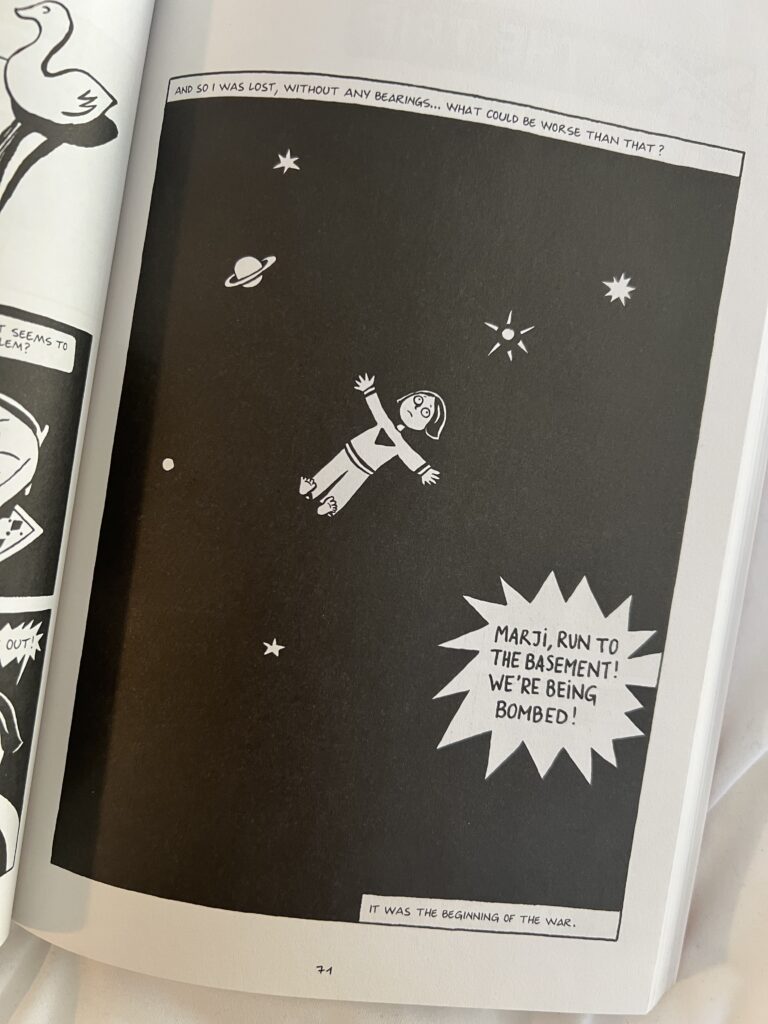
HUMOR
Due to the depressing reality of violence in conflict areas, the humour in this book is essential. It arrives in places, just when it’s needed, and it’s charachter driven: a hilarious quip from Marjane’s father or mother, or Marjane exploding and speaking the truth at the most inopportune time.
THE ENDING
Without giving away the ending, the true weight of exile settles in with devastating clarity. How does war affect families? What does family mean for refugees?
Key Excerpts
“You remember the day they pulled out my nails? They have grown back since. Not in a normal way… But at least I have them.” – page 50
How do you think the experience of reading this book would differ if there were no illustrations? What do you make of all the violence in this book? How does Marjane cope with all the violence? How do other Iranian’s depicted cope?
“There are lots of heros in my family. My grandpa was in prison, my uncle Anoosh too: for nine years! He was even in the U.S.S.R. My great-uncle Fereydoon proclaimed a democratic state and he was…” – page 61
“I wish he were alive and in jail rather than dead an a hero.” – page 86
What does it mean to be a hero in this book, and which heroes does the author portray?
“Then I began to draw caricatures of the teachers. I had gotten into this habit with my teachers in Iran. The difference being that they were all veiled, therefore much easier to draw. These portraits brought me some goodwill.” – page 165
Breaking the fourth wall. How does Marjane Satrapi architect this? How is her narration similar to and different from Art Spiegelman’s in Maus?
“‘It’s true what they say about Iranians. They have no education.’
‘It’s true what they say about you, too. You were all prostitutes before becoming nuns!’” – page 177
Global perspectives. How do differing points of view alter the protagonist’s journey in this book? Do they change your mind or opinion about anything?
My Thoughts and Reflections
★★★★★
I have so much in common with this author/artist, from the superficial (hobbies, punk ethos, being honest to a fault) to our deepest values (activist upbringing, education, individualism, respect for family). Women’s empowerment is a theme I can’t get enough of. I loved her depiction of getting lost as a young person and then ultimately finding her integrity, strength, and voice. The honesty in this book was refreshing. She didn’t avoid detailing themistakes she made along the way. And where we’re different, I learned so much. I know more about the history of her home, social groups, and struggles in Iran. I have a better understanding of what it feels like to be a refugee and how other students often neglect the lived experiences of refugees. I’m grateful to Marjane Satrapi for creating this gorgeous, enlightening book.
Topics/Ideas/Books/Authors I’m Curious About As a Result of Reading The Complete Persepolis: 20th Anniversary Edition
This book explained a bit of Iraq-Iran history that I’d always been confused and curious about. I’d love to read more YA books from Middle Eastern authors.
I also want to rewatch the film, Persepolis. I saw it many years ago, before reading this, and I loved the animation and story. However, my memory of the adaptation is foggy. I’d like to know how this differs from the film, in case I want to recommend one or the other to students. I’d also like to see how the screenwriter adapted it.

Leave a Reply