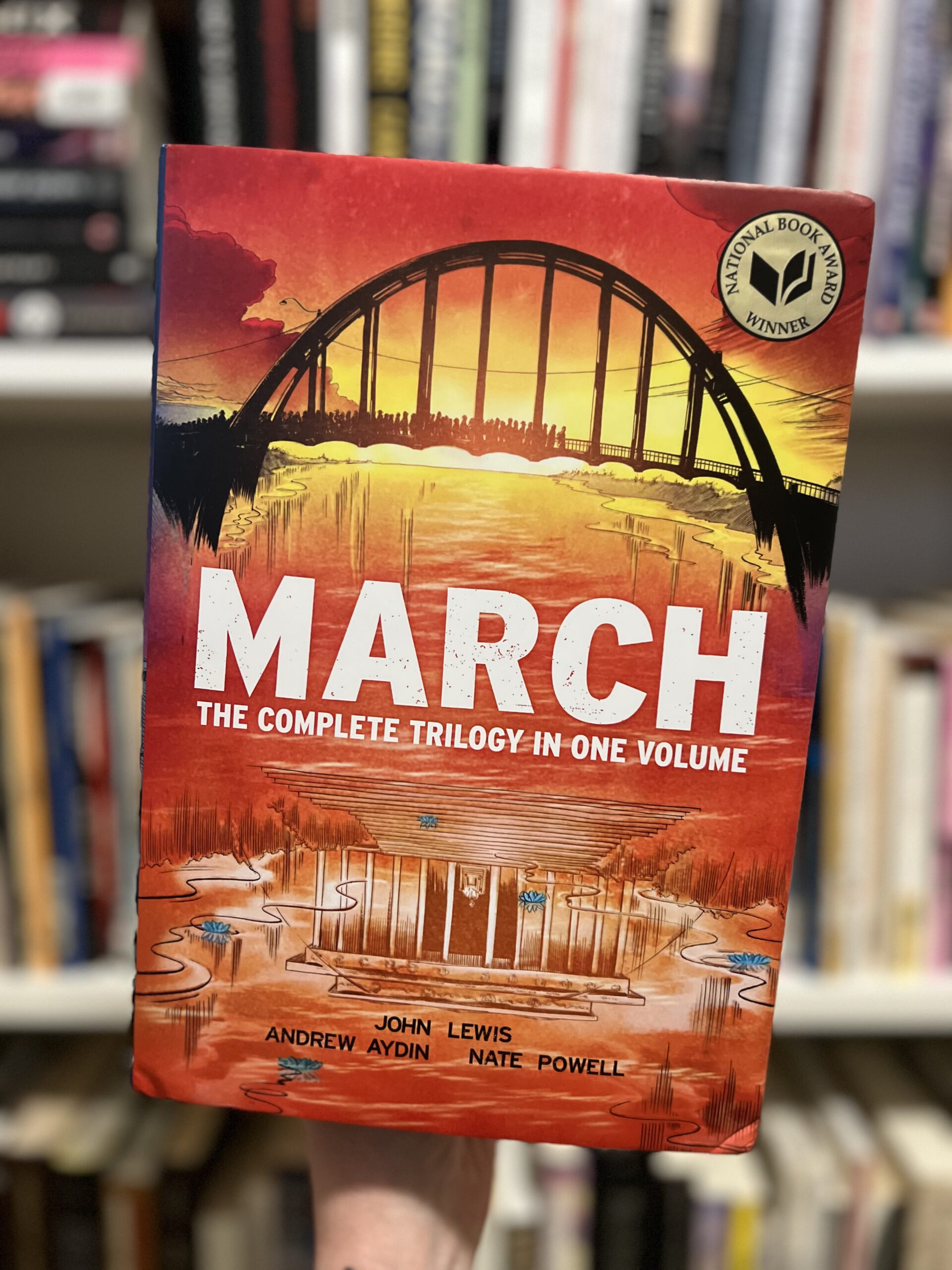
By John Lewis, Andrew Aydin, & Nate Powell
“We’re gonna march.”
Summary
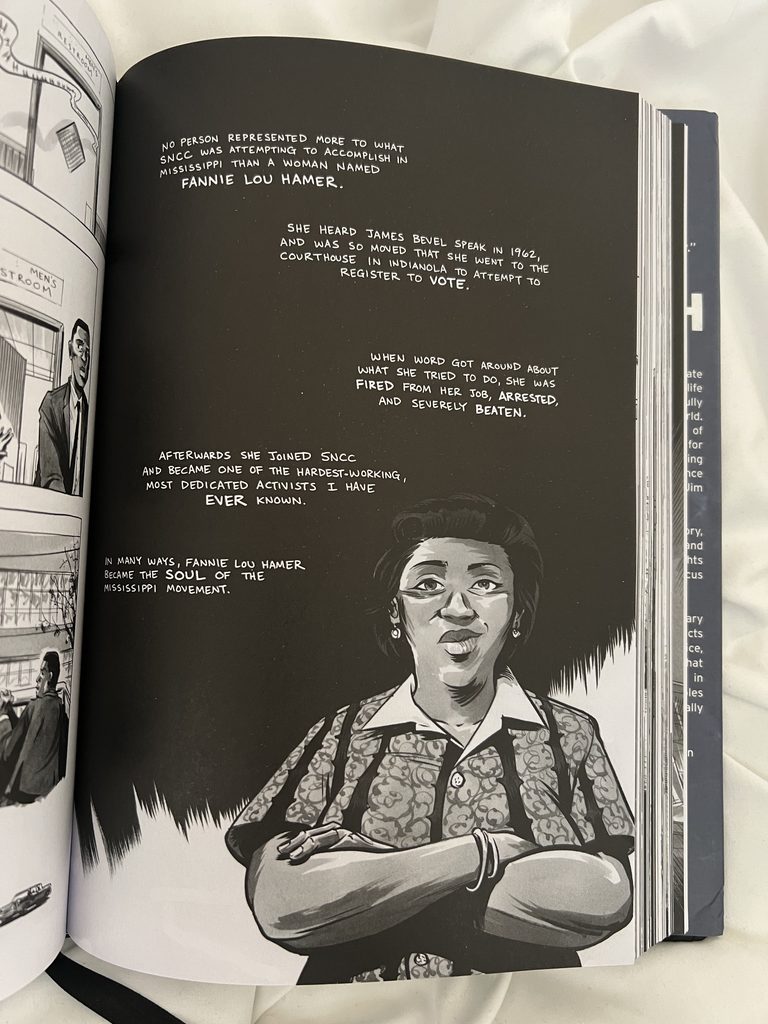
This graphic memoir is about John Lewis, who devoted his life to advancing equity for Black Americans via nonviolence. It details his childhood in Alabama, one of the states that fought hardest and longest against desegregation. It explores his membership and eventual leadership of the Student Nonviolent Coordinating Committee (SNCC). Lewis organized and attended sit-ins at lunch counters, stand-ins at movie theaters, Freedom Rides on buses, and marches across the country. He played a key role in securing the Voting Rights Act. Brutal beatings and jail time did not stop him. Woven throughout are Lewis’ encounters with hundreds of thousands of civil rights advocates and powerful activist leaders he met along the way: Martin Luther King Jr., Malcolm X, Rosa Parks, Bayard Rustin, Fannie Lou Hamer, etc. The book is framed around the 2009 election of Barack Obama.
Quick Info
- Year of Publication: 2026
- Number of Pages: 588
- Awards/Nominations: National Book Award, Coretta Scott King Book Award, Michael L. Printz Award, Robert F. Sibert Informational Book Award, YALSA Award
Why I Chose to Read March (Omnibus Edition): The Complete Trilogy in One Volume
Last week, the United Nations voted and passed a resolution declaring the transatlantic slave trade was the gravest crime against humanity. All EU nations abstained from voting. Argentina, Israel, and the United States were the only countries to vote “NO” on the resolution. Today, news outlets reported that the “Secretary of War” has stopped promotions for Black, women, and trans service members. Apparently, we’re regressing, skipping separate but equal, and leaping all the way back to segregated and unequal. I read March to understand the history of U.S. civil rights movements, and to support progress and anti-racism.
Teaching Considerations
Audience: Booksellers list this as “ages 13-16.” I’m disappointed by this. There is a scene where Fannie Lou Hamer describes her brutal rape. There are no graphic images of what she says, but it is highly disturbing. For this reason, I can see why some parents and families would choose to wait until middle or high school to share this. Personally, I’d read it with young people 5+ and adults of any age. The earlier we can teach humans about equity and historical inequity, the better.
Key Themes: civil rights, racism, systemic injustice, nonviolence, voting rights, courage, sacrifice, community action, hope, progress.
Grouping Recommendation: This would be a great choice for small-group reading during a graphic novel unit in American Lit. Or perhaps it could be a full-class unit, and we can make it manageable by splitting the trilogy, so medium-sized groups each get one of the three volumes.
Instructional Ideas:
HISTORY
Lewis’ life intersected with so many pivotal moments in time:
The deaths of Emmett Till, Addie Mae Collins, Carole Robertson, Cynthia Wesley, Denise McNair, John F. Kennedy, Mickey Schwerner, Andy Goodman, James Chaney, Malcolm X, Jimmie Lee Jackson, Viola Luizzo, etc.
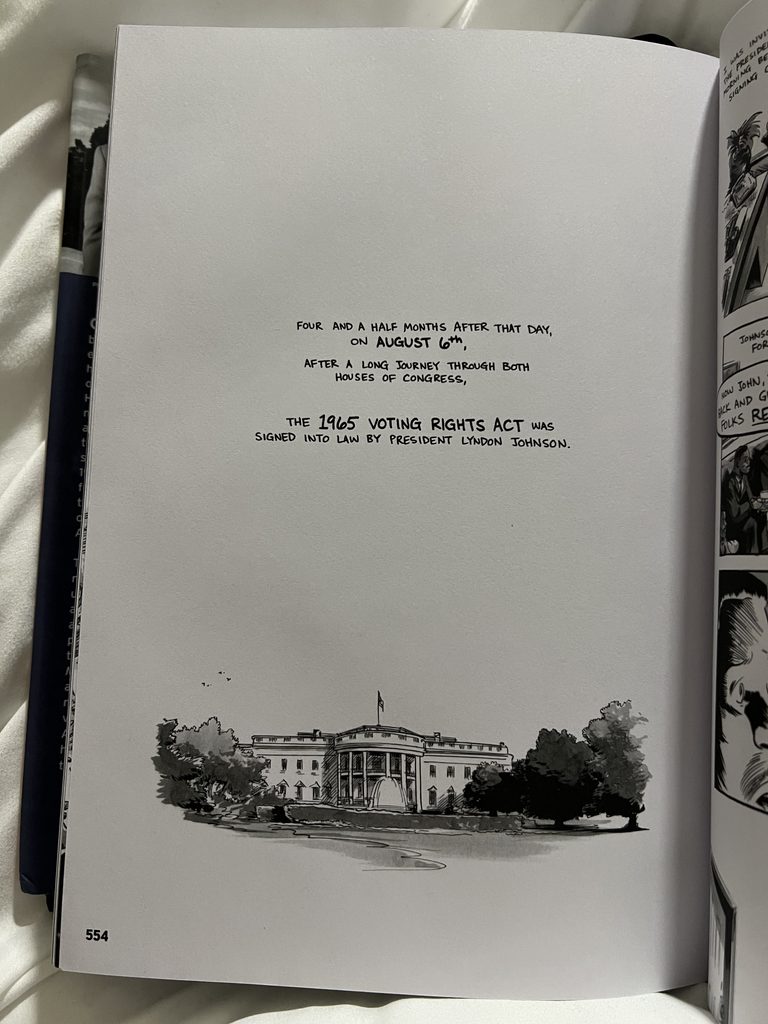
Jim Crow segregation, the Montgomery Bus Boycott, Nashville sit-ins, Freedom Rides, the March on Washington, Freedom Summer, Selma and Bloody Sunday, the Voting Rights Act, Barack Obama’s inauguration, etc.
STRUCTURE
The way I interpreted this text: book one centered on sit-ins, book two on bus boycotts, and book three on the fight for voting rights. The inauguration of the first Black president served as a frame for the narrative.
ILLUSTRATIONS
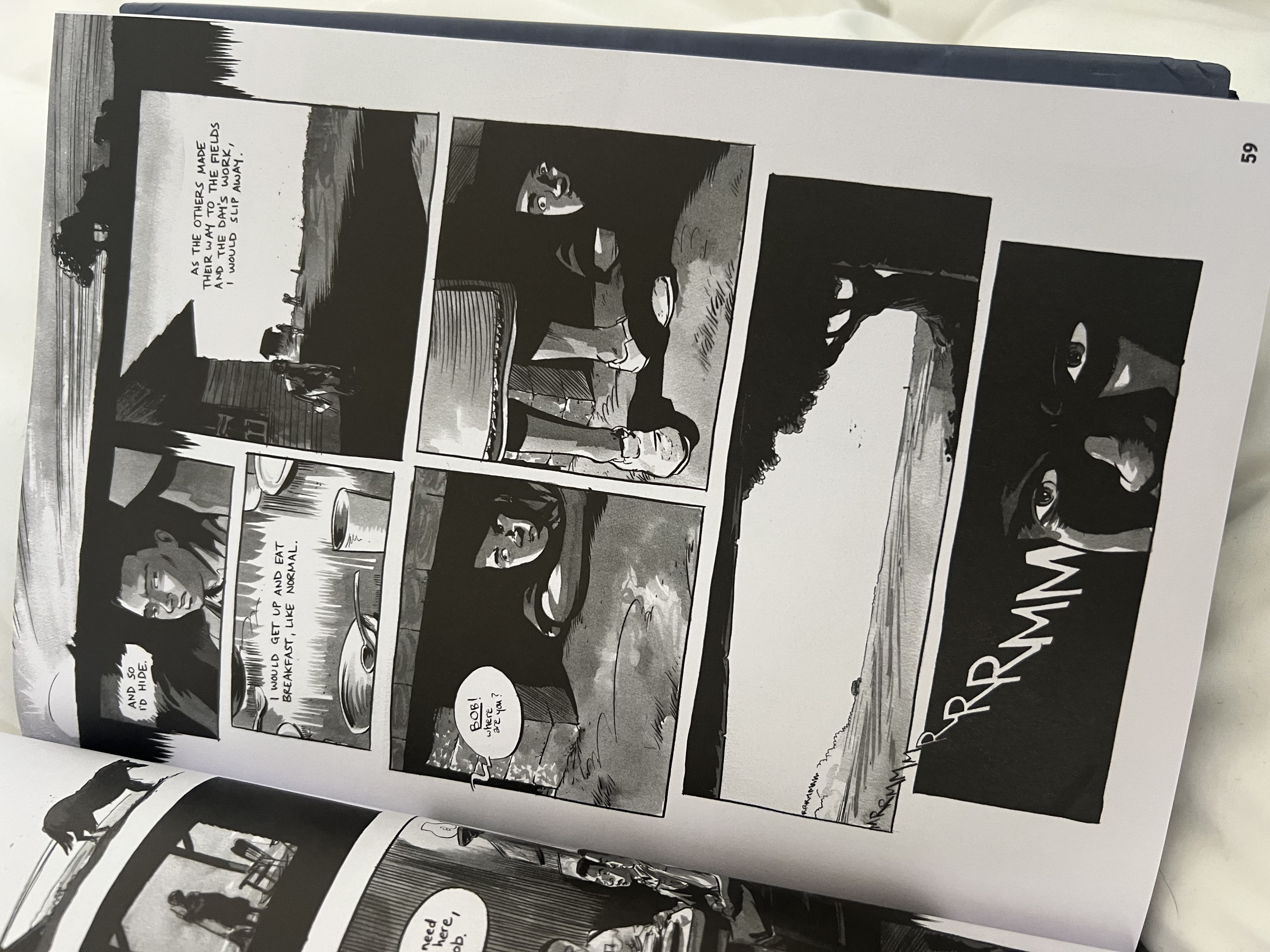
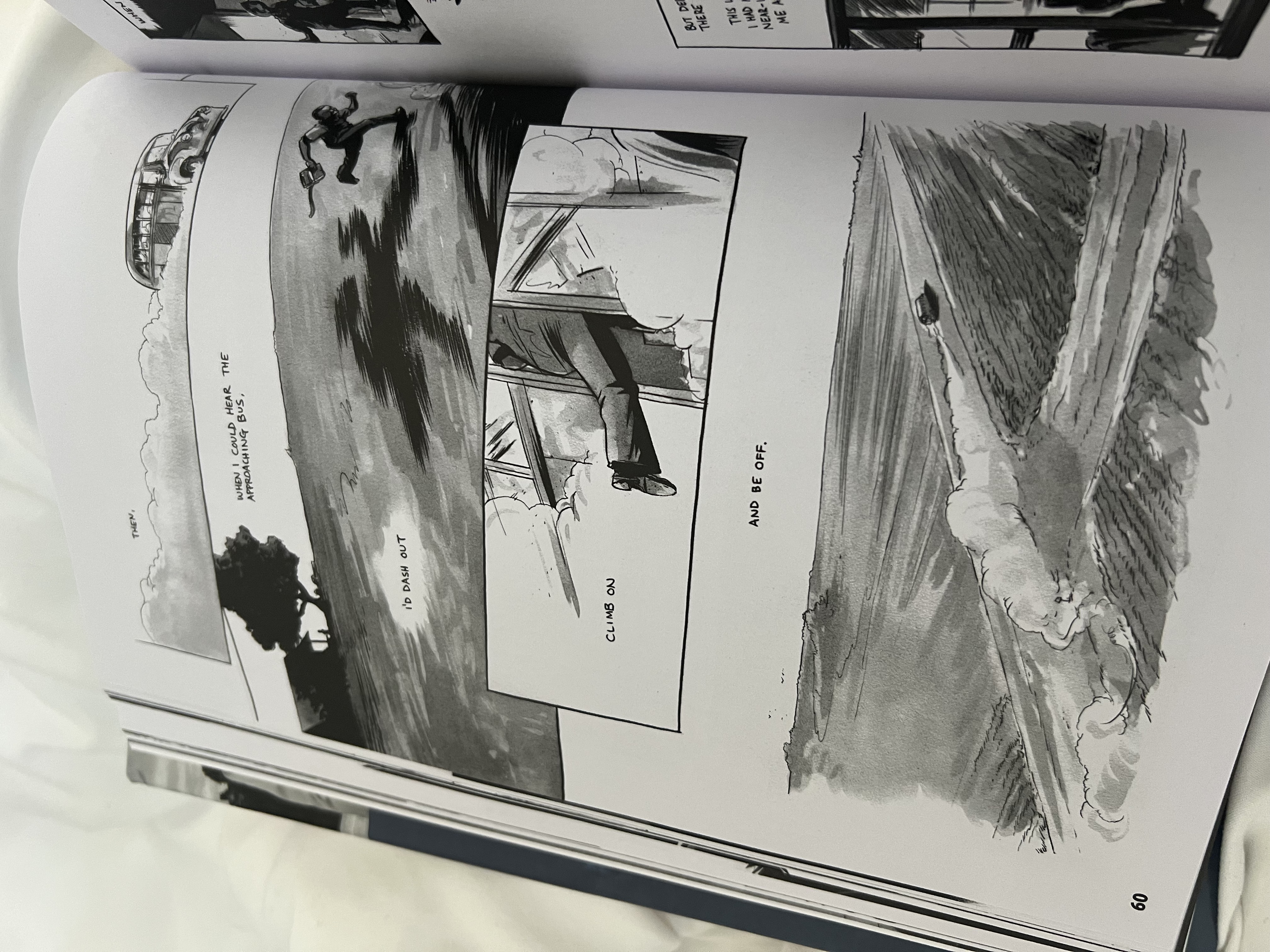
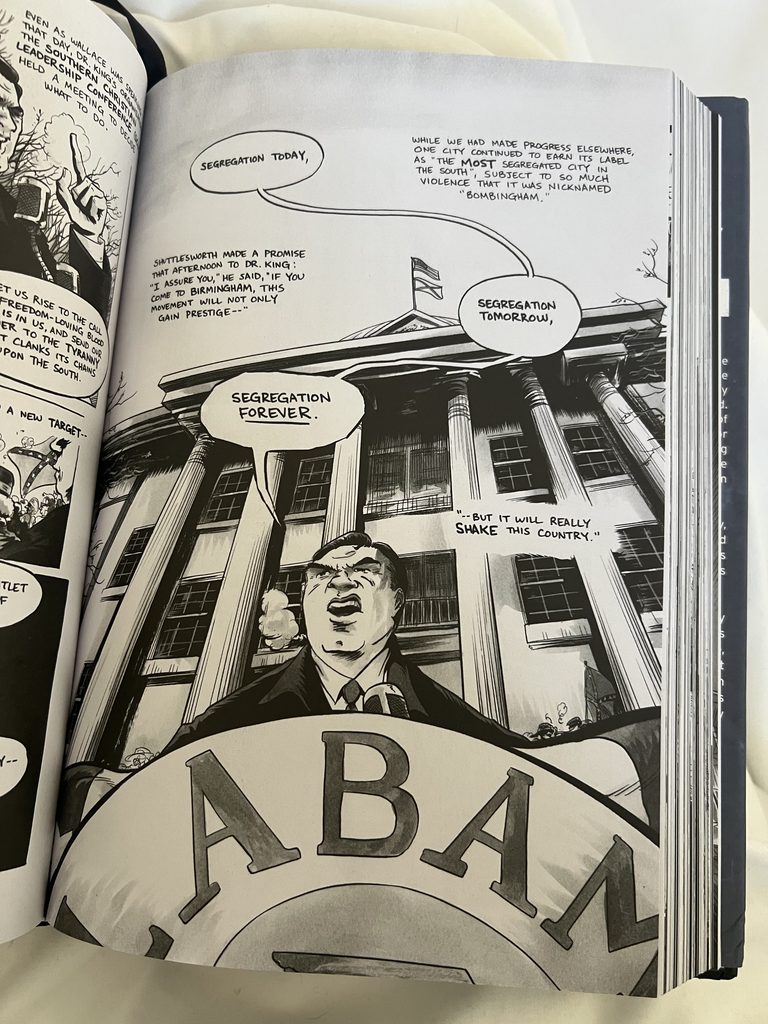
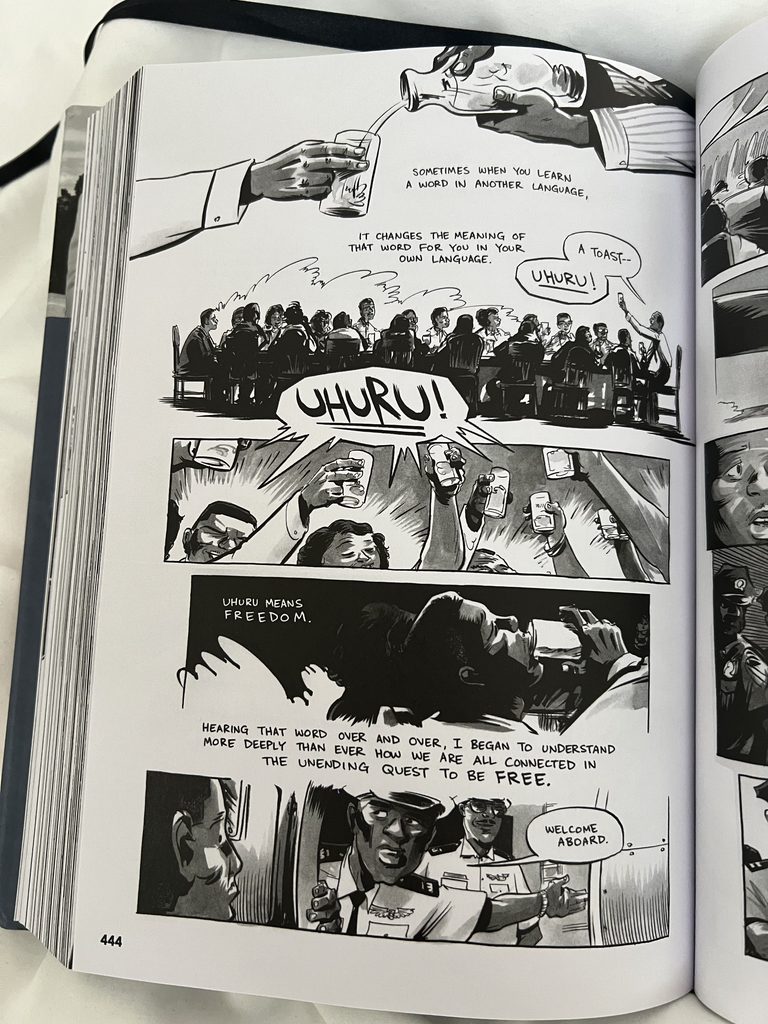
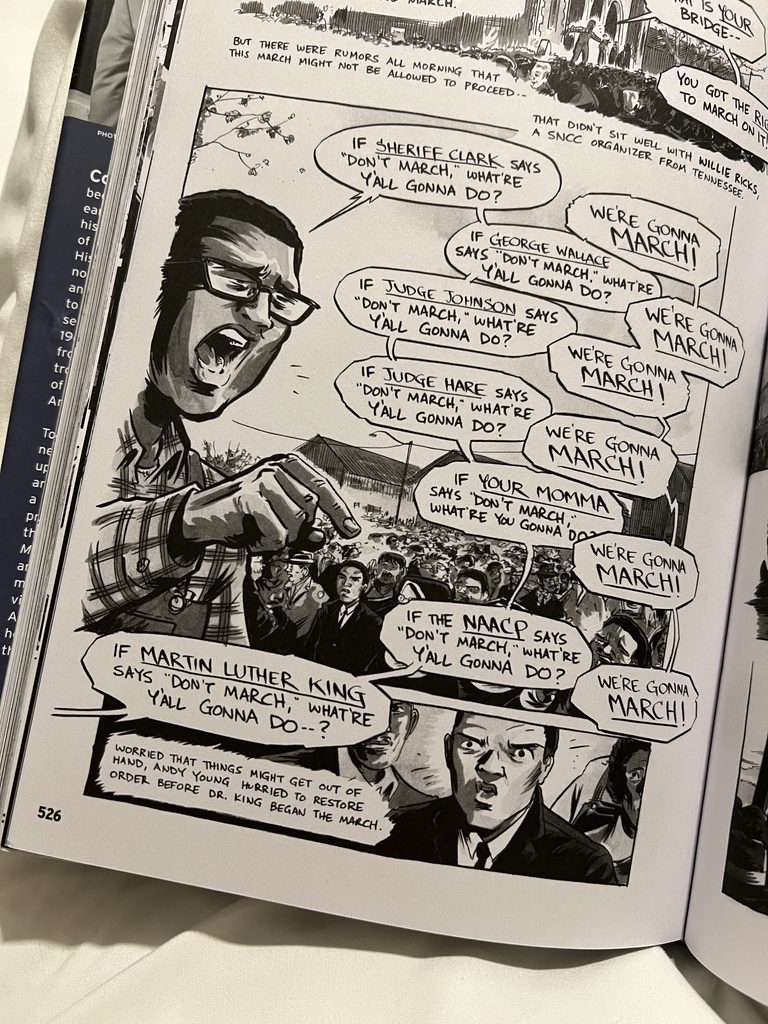
Nate Powell’s black-and-white illustrations were riveting. From start to finish, his artwork clearly, bluntly, and beautifully supported this story. His visuals emphasized all of the brutality Black America and allies have been forced to face in the pursuit of equality and human rights. He also captured quieter moments in John Lewis’ life, and moments of hard-won celebration (often accompanied by joyful tears.)
Key Excerpts
“The thing is, when I was young, there wasn’t much of a civil rights movement. I wanted to work at something. But growing up in rural Alabama, my parents knew it could be dangerous to make any waves.
‘stay out of trouble.’
‘don’t get in white people’s way.’” – page 44
How has the U.S. changed since John Lewis started getting into “good trouble”? Offer three examples. Name three additional changes you’d like to see take place in the U.S. in your lifetime.
“…I submit that an individual who breaks a law that conscience tells him is unjust, and who willingly accepts the penalty of imprisonment in order to arouse the conscience of the community over its injustice, is in reality expressing the highest respect for law” – page 262
Do you agree that it’s OK to break the law to fight injustice? When and why? Cite examples from the book.
“I don’t know how President Johnson can send troops to Vietnam. I don’t see how he can send troops to the Congo. I don’t see how we can send troops to Africa, and he can’t send troops to Selma, Alabama.” – page 521
March offers insight into how federal laws adopted by the U.S. government are often implemented excruciatingly slowly across all fifty states or dismissed entirely. Why did Lewis ask for troops here? What proof was there that troops were needed?
Book Talk Excerpt
“Reverend F.D. Reese was president of the Dallas County Voter League, but he was also a school teacher, and he actively organized his colleagues’ participation.
Never before had school teachers gathered to march. Some had joined here and there, but this was something to behold.
Margaret Moore’s participation earlier in the week served as inspiration–nearly every black school teacher in Selma turned out.
Many of them carried toothbrushes to show they weren’t afraid of going to jail” – page 474
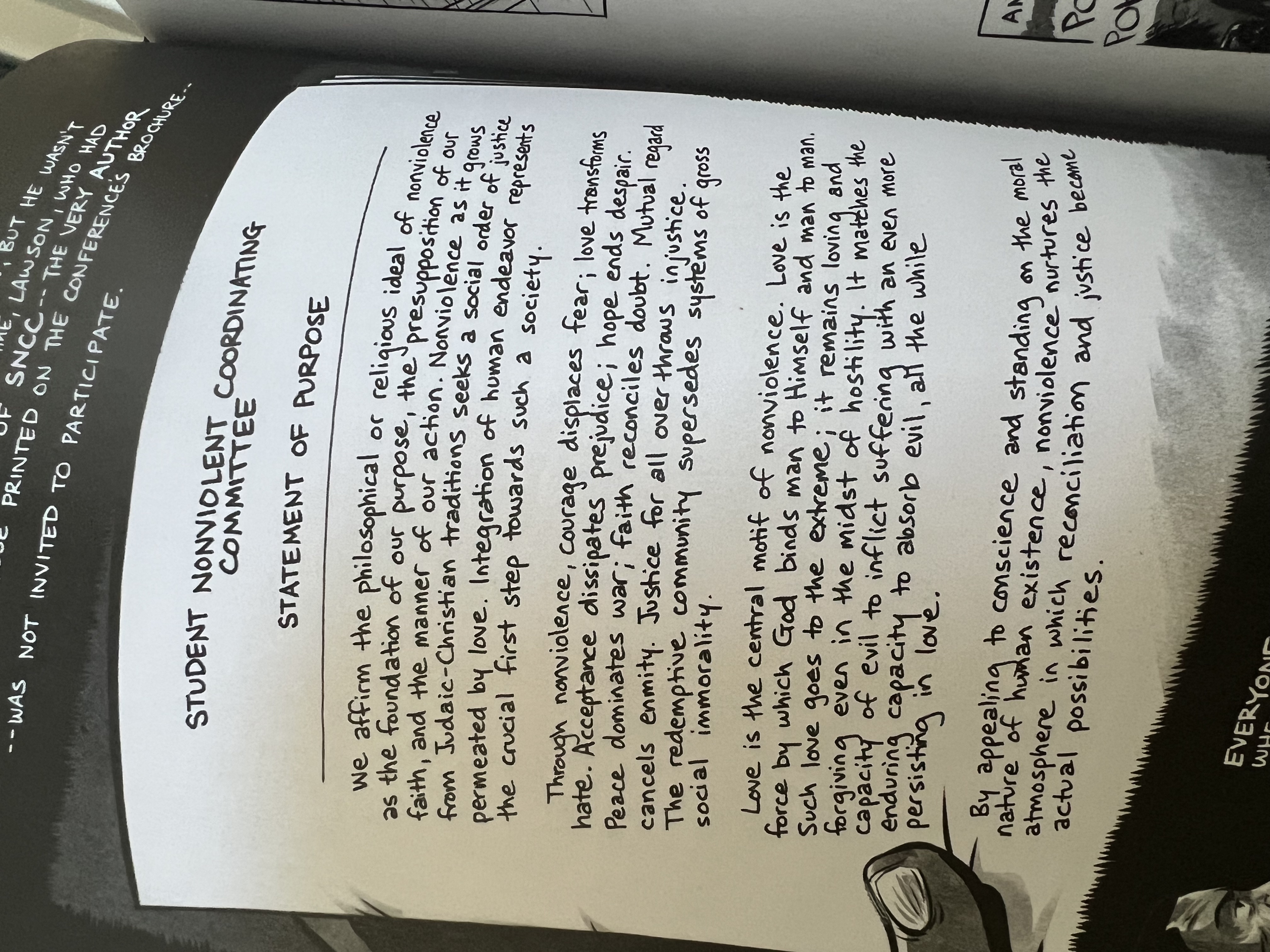
What do you think about the 1962 SNCC statement of purpose?
What do you think of school teachers marching for Black voting rights in 1965? What was their strategy? What would have happened if they’d all gotten arrested or worse?
My Thoughts and Reflections
★★★★★
The word “epic” is chronically overused, but it’s the perfect adjective for this masterpiece. What a memoir! What a story! The illustrations are gorgeous and impactful. For anyone questioning the importance of organizing and protesting against oppression, this is the answer. I love how the authors simultaneously created a powerful historical record and a wholly addictive piece of entertainment. After reading, I felt like I’d watched a film. I will definitely recommend this in and out of class.
Topics/Ideas/Books/Authors I’m Curious About As a Result of Reading March (Omnibus Edition): The Complete Trilogy in One Volume
March included bits and pieces on figures integral to Black equity in America, and I’d like to learn more about many of them. To start, I would like to read Walk with Me: A Biography of Fannie Lou Hamer by Kate Clifford Larson, Malcolm X: A Life of Reinvention by Manning Marable, Troublemaker for Justice: The Story of Bayard Rustin, the Man Behind the March on Washington by Jacqueline Houtman, Walter Naegle, Michael G. Long, and To ’Joy My Freedom by Tera W. Hunter. As I believe advocates for people with disabilities often get left out of the civil rights conversation, I’d also like to read Being Heumann: An Unrepentant Memoir of a Disability Rights Activist by Judith Heumann and Kristen Joiner.
Leave a Reply