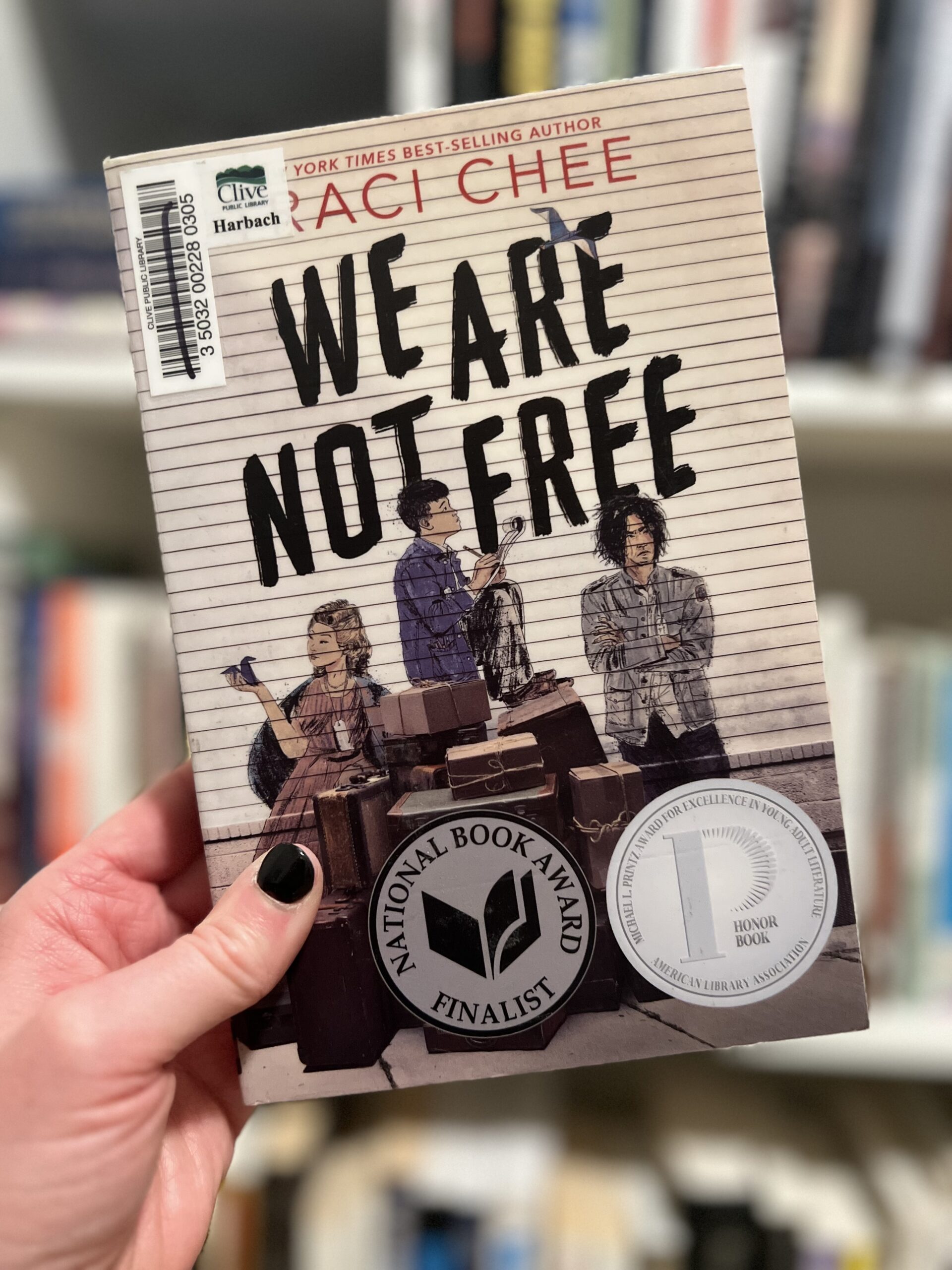
By Traci Chee
“‘But we didn’t do anything.’
‘What d’you mean, Minnow?’ Stan smirks, but there’s a hard edge to his expression, like the blade of an axe. ‘We exist.’”
Summary
We Are Not Free is an ensemble narrative of fourteen young Japanese-American friends during WWII, before they’re sent to internment camps, during, and after. Though they all have much in common, each storyteller offers a unique voice and perspective, and the traumas of war force them to grow and change in unexpected ways.
Quick Info
- Year of Publication: 2020
- Number of Pages: 400
- Awards/Nominations: Michael L. Printz Honor, National Book Award, Walter Honor, Asian/Pacific American Award for Literature Honor
Why I Chose to Read We Are Not Free
The parallels between the book blurb for We Are Not Free and what immigrants are experiencing today in the USA are alarming. How can we continue to perpetuate xenophobic injustices? How can anyone believe one human life is more valuable than others? I decided to read this book because I’m sad and angry, and I’m seeking perspective-altering recommendations for my students and beyond.
Teaching Considerations
Audience: Booksellers list this as “ages 12+.” Personally, I’d share much of this content with kids 5+, as the subject matter is so timely. The book does depict violence, war, abuse, and underage drinking.
Key Themes: friendship, acceptance, nationalism, war, injustice, immigration, racism, and xenophobia.
Grouping Recommendation: This would work for a full-class unit if it were broken down by character/chapter, with students pairing up to read and present to the class. I could print out the first and last chapters narrated by Minnow, and do read-alouds at the beginning and end of the unit. I could also print the chapter narrated by “All of Us” and have students pass it around the room and read.
Instructional Ideas:
CHARACTER/STRUCTURE
Chee’s book gives voice to fourteen young people from a group of Japanese-American immigrants who were friends in San Francisco before being sent to internment camps. Each chapter is either a short story, a poem, or a journal entry. They’re told in chronological order. The climax is a chapter where all the friends come together in grief. The story is bookended by chapters, before and after internment, from Minnow, one of the friend group’s youngest members. This is a master class in creative writing!
SENSORY ELEMENTS
Readers can hear moments in time, thud!, snap! crack! click click click click, boom! pop! pop! The violence in this book is loud!
Readers can smell the sour vomit, body odor, and broken toilets of two hundred men arbitrarily sent to the stockade barracks.
Readers can taste the dirt-covered handful of rice hidden in Kiyoshi’s pocket.
Readers can feel baseballs thrown and caught, sometimes with bare hands.
Readers can see Hiromi “Bette” in her bright, blond Bette Davis wig.
HISTORY
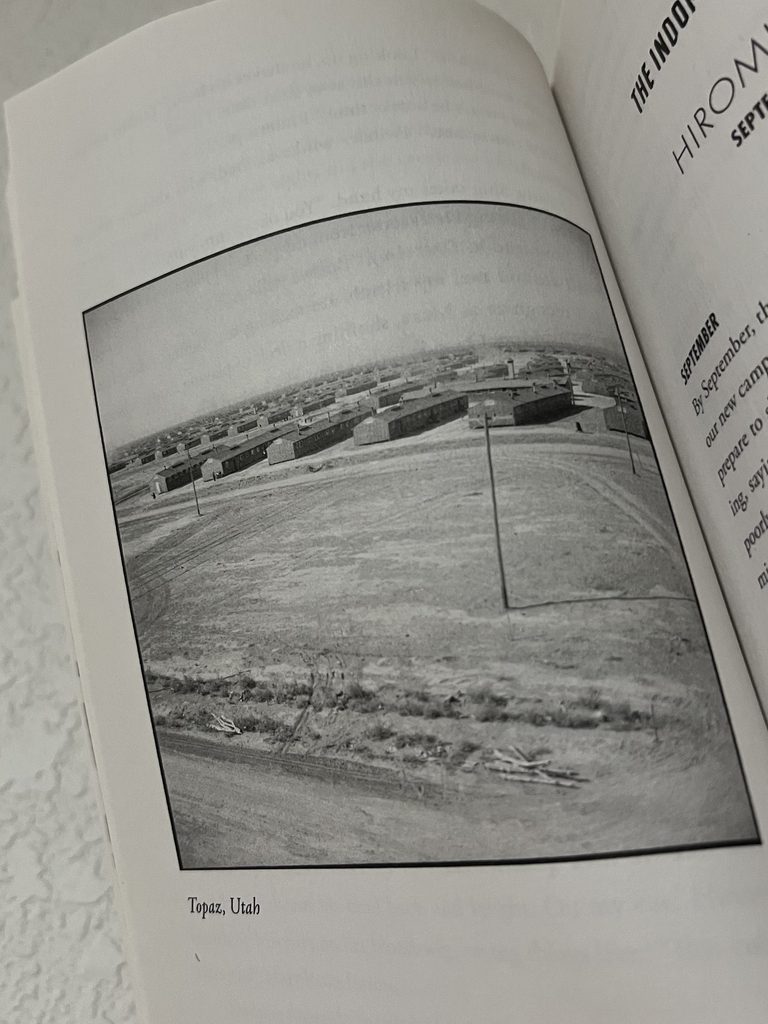
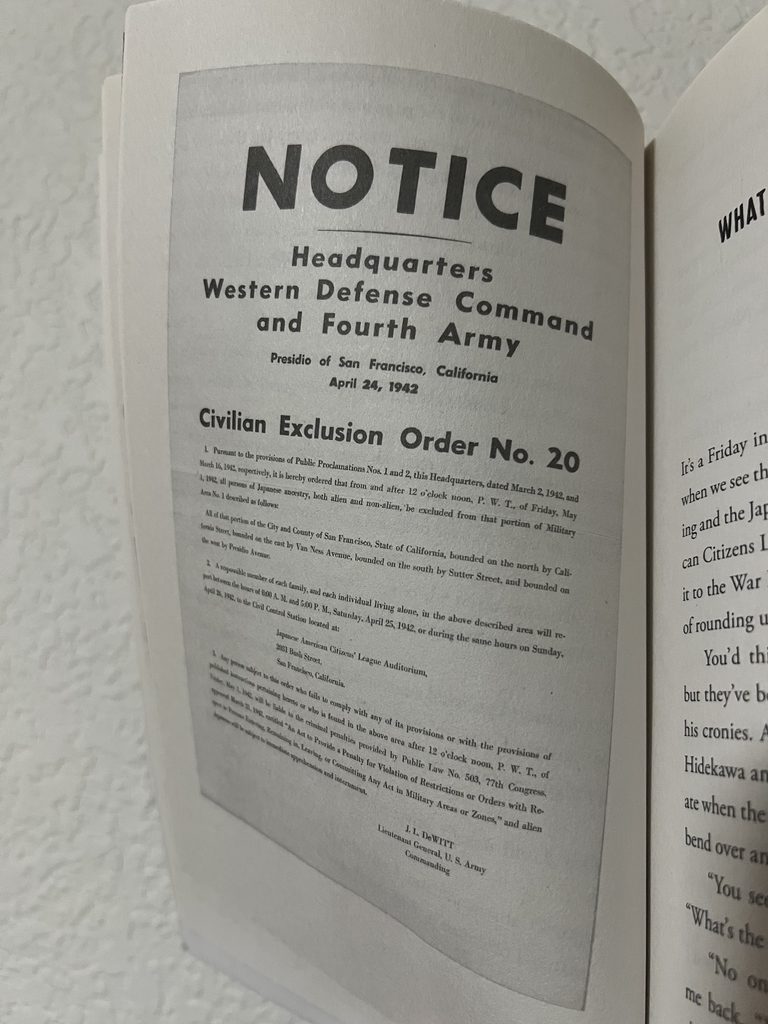
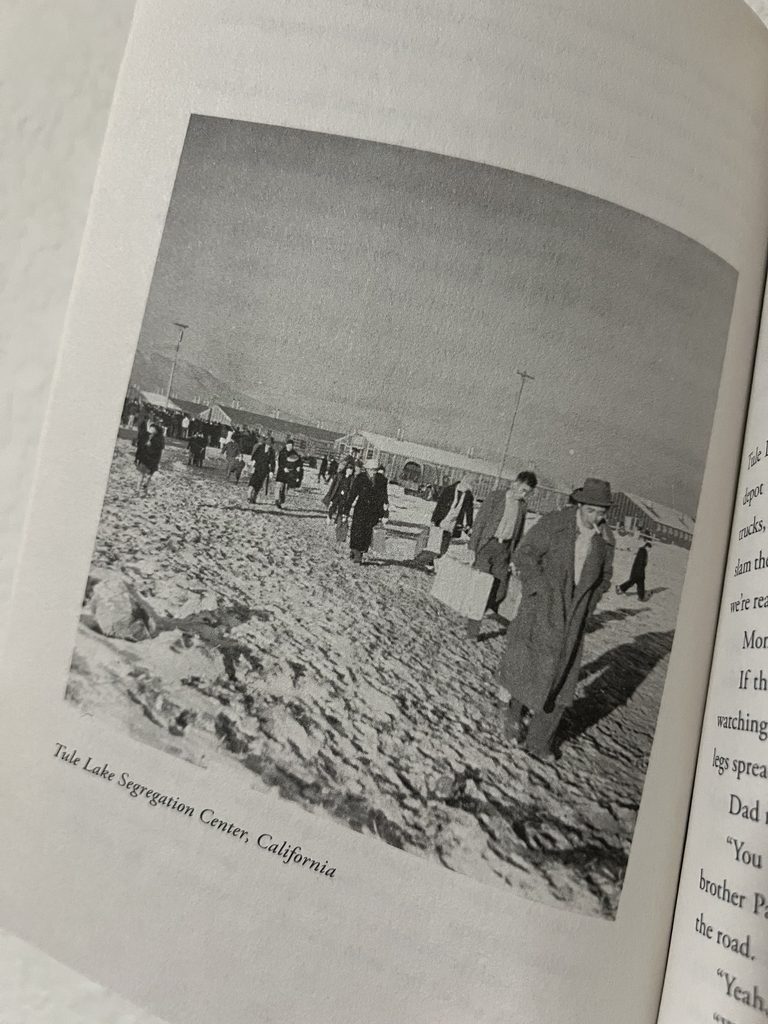
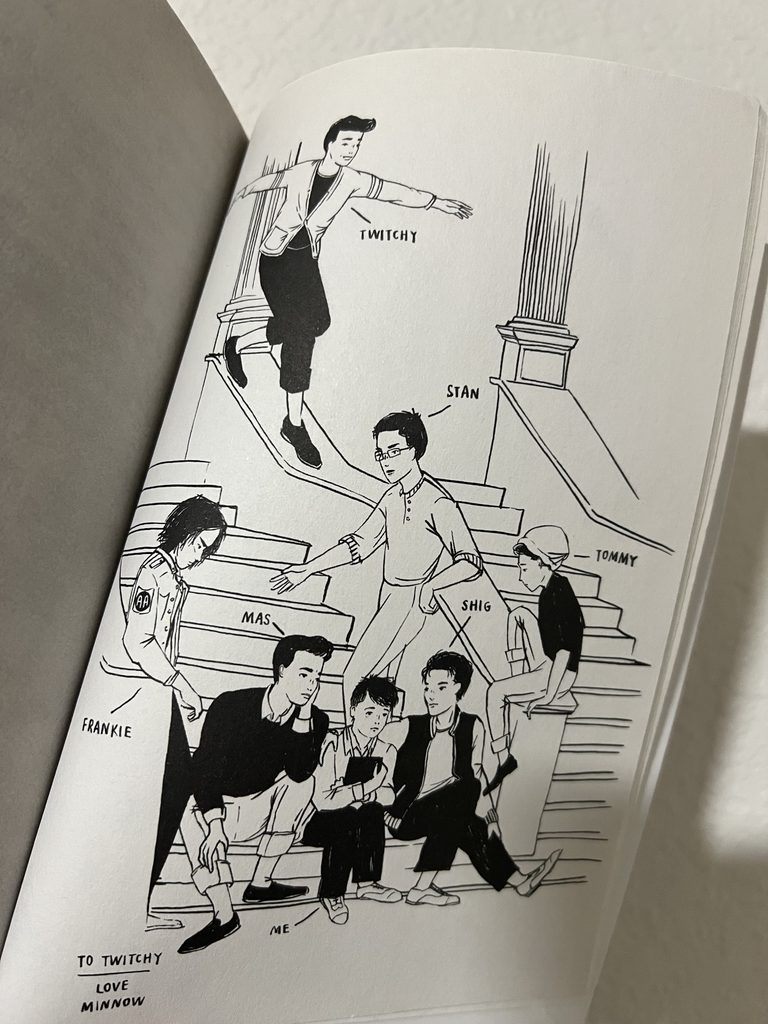
This book included a variety of media to give a fuller picture of Japanese internment camps, who ran them, who apprehended them, why, and how. The author also used illustrated documentation at times to depict stories of creative characters such as Yum Yum, a pianist, and Minnow, an artist.
Key Excerpts
“‘WE DON’T SERVE JAPS HERE!’ he bellows, like he can’t hold it in anymore. His voice is so loud, it echoes in my head.
JAPS
JAPS
JAPS
Unlike an echo, it doesn’t get any softer.” – page 169
This excerpt is from Yuki’s chapter, in which her Topaz internment camp softball team beats a Caucasian local high school team. After, they risk going out to a small grocer for real ice cream, the kind some of them haven’t had in over a year. This is the outcome. Chee knows just how to torture her characters and readers. She’s an expert at crafting emotional stories.
Which part of this book was most heartwrenching for you?
“‘No,’ Minnow says. He looks frightened. He swallows. I mean, ‘I loved him.” – page 305
This book is subtle and loud. The author made strong choices, including characters (e.g., Leonard Thomas) and character details (e.g., Minnow being gay), that remind readers that all humans have the potential to be dehumanized or to be respected allies. If we allow anyone to be dehumanized, we’re all susceptible.
Can you find further examples of acceptance and allyship in this book?
Book Talk Excerpt:
“In the world of Tule Lake, they want you to obey, they want you to be a troublemaker, they want you to admit to things you haven’t done and allegiances you never held, they want you to accept these injustices with a smile. In the world of Tule Lake, you are shot at the gates for trying to get to work on time, for moving too fast, for scaring the Caucasians.
You move, or you do not move; you freeze, or you act; it doesn’t matter. You are too dangerous anyway, too yellow, too slow, too stupid, too weak anyway. You are arrested anyway. You are beaten anyway.
So I move.
The frost crunches as I take a step, a single step, one step forward.
In the silent yard, the sound is like an avalanche.
Or a breaking branch.
Or an eggshell.
It takes a second for Lieutenant Swinson to notice, but when he sees me in the fifth row, his eyes bulge. His cheeks inflate. A vein in his temple pops, blue as a fragment of sky.
But before he can say anything, before he can shout and rail and thunder, before he can have me dragged away, the other prisoners, every one of them, all around me, step forward. The earth trembles under our weight, the weight of all of us, more than two hundred Japs, moving and immovable.
But it doesn’t break.
And neither do I.” – page 222-223
I’d consider reading this entire chapter during a class period. Kiyoshi’s story is so heartbreaking and moving. It explores the impacts of hunger and parental abuse, and spotlights a young person finding his way in spite of all he has been through.
My Thoughts and Reflections
★★★★★
We Are Not Free is brilliantly conceptualized and executed. Paradoxically, this narrative captures the most inhumane experiences in the most beautiful way. The characters are lovely, and their stories are artfully woven together into a tapestry that proves the power of friendship. I’m in awe of Traci Chee’s work and will recommend it far and wide, especially in 2026.
Topics/Ideas/Books/Authors I’m Curious About As A Result of Reading We Are Not Free
In Chee’s book, non-Japanese Asians in San Francisco are sometimes mistaken for Japanese, highlighting the widespread racial ignorance and prejudice of the time. This made me curious to learn more about the experiences of other Asian American communities during World War II and how they responded to these injustices. Hotel on the Corner of Bitter and Sweet has an intriguing premise.
Sadly, I’m certain that books like this will come out in the future about immigrants arrested up to and during the height of the second Trump administration’s mass ICE surges, raids, and deportations. There’s a new illustrated elementary poetry book called Barbed Wire Between Us that I’d like to read to my daughters.
Leave a Reply